The conversion problem no one talks about
UK heat pump installers spend serious money generating survey bookings. But for many, fewer than 1 in 5 of those surveys ever turns into a signed contract. The leads looked warm. The survey went well. Then nothing.
If that sounds familiar, the issue usually isn't your installation quality or your pricing. It's one of five repeatable problems that the best-performing installers have already fixed.
1. The homeowner was never properly pre-qualified
A survey booked from a cold Facebook ad or a recycled lead list is not the same as a survey booked from someone who has already confirmed they want a heat pump, have a realistic budget, and understand the process.
When the lead is low-intent to begin with, no amount of charm on the day will rescue the conversion. The best installers only send surveyors to homes where the homeowner has already been walked through what to expect, including cost, timelines, and disruption.
2. Too much time between enquiry and survey
Interest in a heat pump installation peaks in the first 24 to 48 hours after an enquiry. After 72 hours, a homeowner has either contacted three other installers or talked themselves out of it entirely.
If your average time-to-survey is more than a week, you are arriving late to a conversation that has already moved on. Top performers book surveys within 2 to 3 days of first contact, or they use pre-booked slots so the homeowner's calendar is committed before enthusiasm fades.
3. No structured follow-up between survey and quote
The gap between completing a survey and delivering a quote is where most jobs are lost. The homeowner's phone keeps ringing with competitors. Their enthusiasm cools. Doubts creep in.
Installers who convert at 35% or higher tend to follow a simple sequence: same-day survey summary by text, quote delivered within 48 hours, and a follow-up call or message on day 5 if there's no response. It is not pushy. It is just present.
4. Surveys booked too far into the future
If your next available survey slot is three weeks out, expect a high no-show rate and a low conversion rate. Homeowners who book that far ahead have ample time to change their mind, find someone faster, or simply forget why they wanted it.
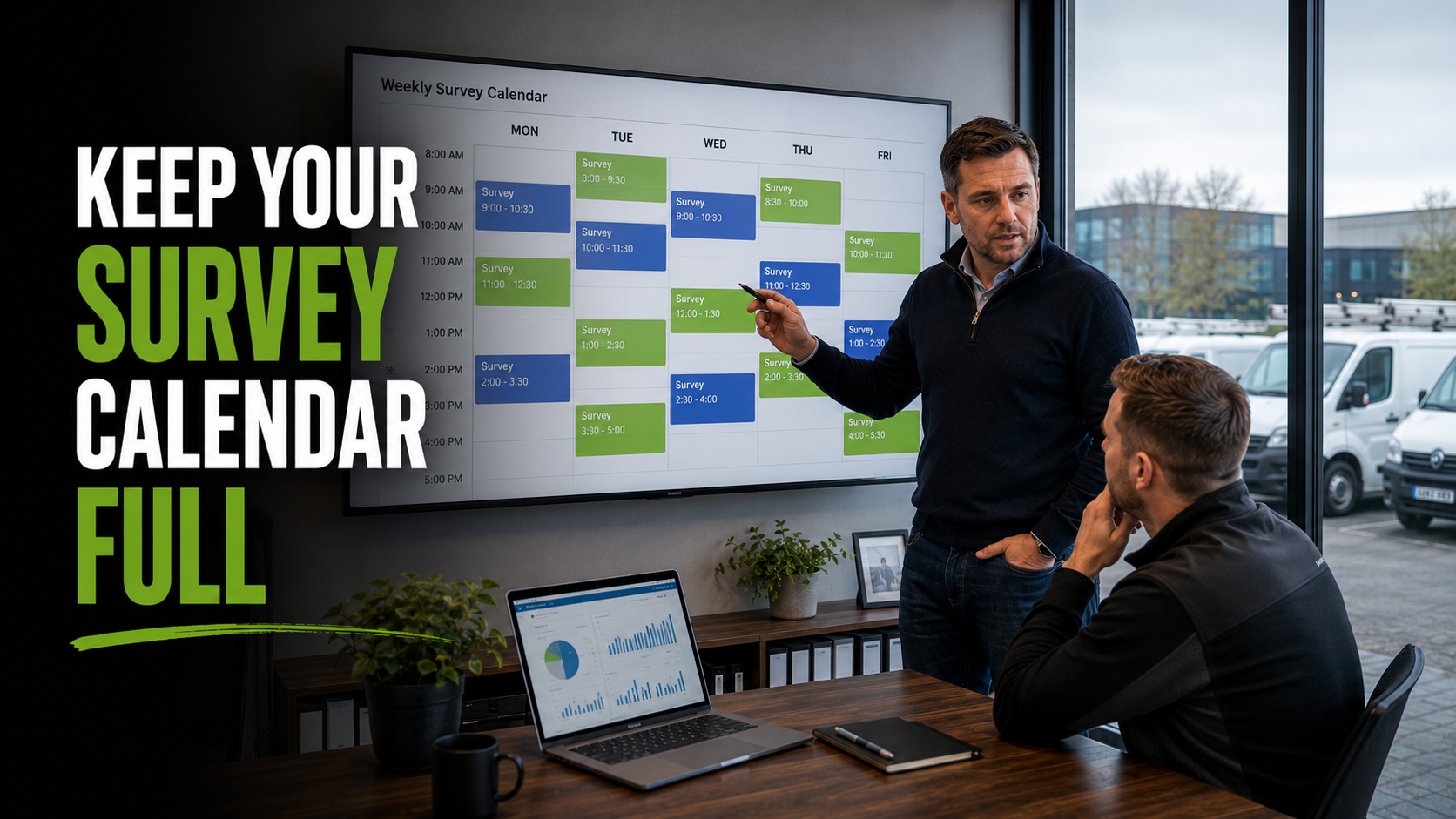
Keeping survey availability within a two-week window, and ideally under 10 days, dramatically improves both attendance and close rates. If your calendar is full, that is a capacity problem worth solving, not a sales advantage.
5. You are not tracking lead quality by source
Not all leads are equal, but most installers treat them as if they are. Without tracking conversion rate by lead source, you have no idea whether your Google Ads are outperforming your Facebook campaigns, or whether the leads you buy from one provider are worth twice what you pay for them compared to another.
Installers who scale efficiently know their cost-per-contracted-job by channel, not just their cost-per-lead. That distinction changes every budget decision they make.
What the best-performing installers do instead
The common thread across high-converting installation businesses is not a magic sales script. It is access to better-qualified opportunities in the first place: surveys where the homeowner has already confirmed intent, budget awareness, and availability.
That is exactly what InstallrHub is built to provide. Pre-booked, pre-qualified surveys with confirmed homeowners, ready to claim when you need them, with no monthly commitment and no contracts.