What Actually Makes a Good Renewable Energy Lead?
Ask ten renewable installers what makes a "good lead" and you'll probably hear ten different answers.
Some believe a good lead is someone who already understands how heat pumps work. Others expect homeowners to know exactly what system they want before requesting a survey. It's also common to hear that if a homeowner doesn't proceed with an installation, the lead must have been poor from the beginning.
While these assumptions are understandable, they don't always reflect what happens in practice.
After working with more than 150 renewable installation businesses and reviewing thousands of enquiries, we've found that the leads with the highest conversion rates rarely fit the stereotypes many people expect. In fact, some of the strongest opportunities come from homeowners who know very little about renewable technology but have a genuine reason for looking for a solution.
Understanding what truly makes a quality lead helps installers spend less time chasing unsuitable enquiries and more time focusing on homeowners who are ready for a meaningful conversation.
Common Misconceptions About Lead Quality
Before discussing what makes a strong lead, it is worth addressing a few common misconceptions.
One of the biggest myths is that homeowners need to be experts before requesting a survey.
In reality, many successful installations begin with customers who have only a basic understanding of solar panels or heat pumps. They are not looking for a technical discussion; they are looking for someone who can explain their options clearly and recommend the most suitable solution for their home.
Another misconception is that good leads never ask questions or raise objections.
Renewable energy systems represent a significant investment. It is entirely reasonable for homeowners to ask about installation costs, expected savings, finance options or how the technology works. Questions often indicate genuine interest rather than hesitation.
A third misconception is that every enquiry that fails to become an installation was a bad lead.
There are many reasons why a project may not move forward. Another installer may have presented a stronger proposal, pricing may not have matched the homeowner's expectations or the sales process may have failed to address important concerns. These situations do not automatically mean the original enquiry lacked quality.
The Three Characteristics of High-Quality Renewable Energy Leads
Rather than focusing on assumptions, successful installers tend to look for three practical indicators that a homeowner is ready to move forward.
1. The Homeowner Has a Genuine Problem to Solve
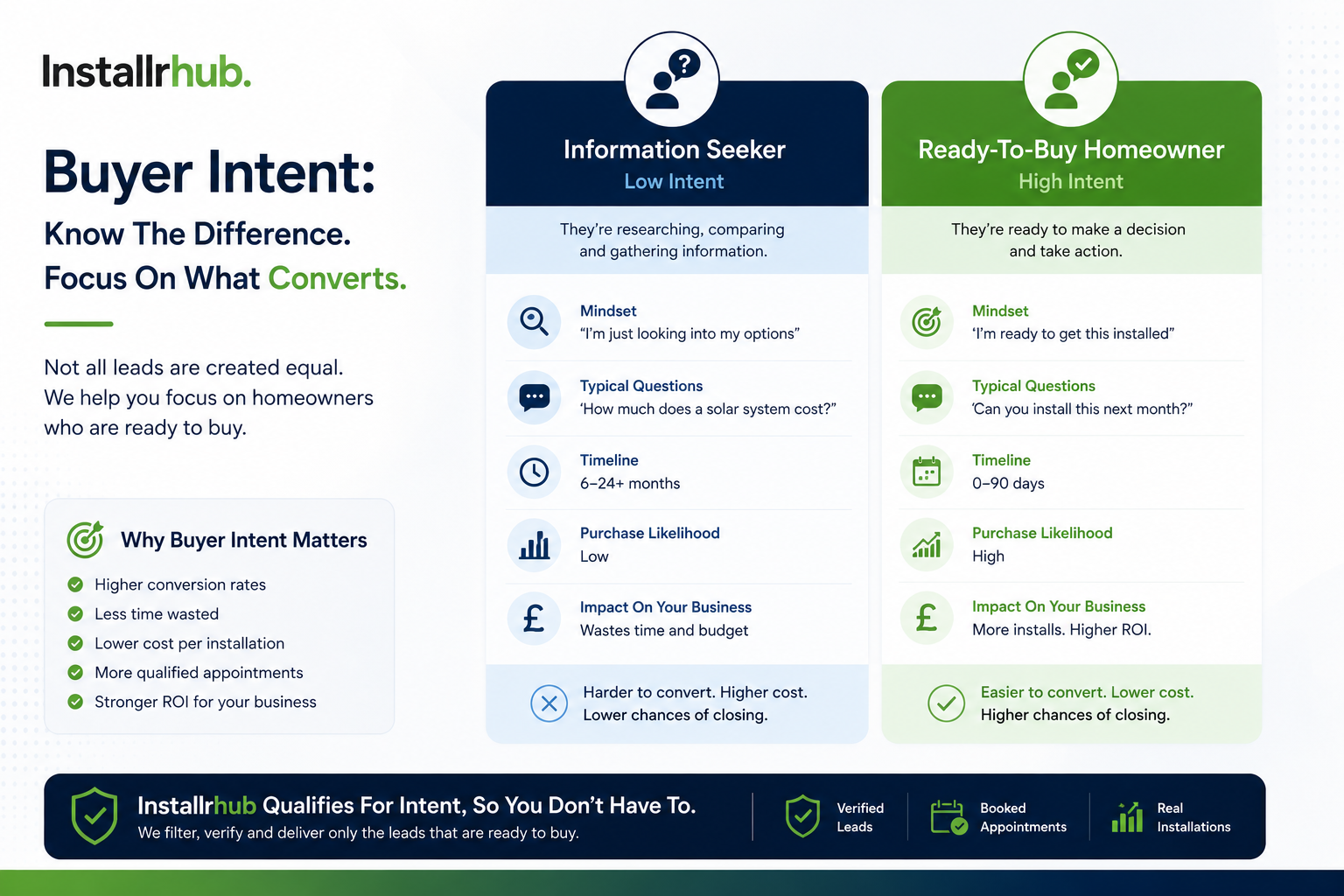
The strongest renewable energy enquiries usually begin with a clear motivation rather than simple curiosity.
For example, a homeowner whose oil bills have doubled over the past year is actively looking for an alternative heating solution. Someone replacing an ageing gas boiler may already be considering whether now is the right time to move to a heat pump. A homeowner who has previously invested in solar panels may be interested in becoming less dependent on rising energy prices.
These homeowners have identified a specific problem and are exploring renewable technology because they believe it may provide an answer.
By comparison, enquiries that begin with "I saw an advert and wanted to know what this is about" often require much more education before a purchasing decision is made. While these conversations can still become successful projects, they generally involve a longer customer journey.
The most valuable question during qualification is often:
"What made you enquire today?"
The answer provides valuable insight into the homeowner's motivation and whether renewable technology is likely to solve the problem they are experiencing.
2. They Have Realistic Expectations About Investment
One of the most common reasons for wasted surveys is a mismatch between the homeowner's expectations and the likely cost of the project.
Some homeowners mistakenly believe renewable energy systems are fully funded or available at little or no cost. If realistic pricing is not discussed until the survey takes place, installers may spend valuable time preparing quotations for projects that were never financially viable.
This is why discussing approximate investment early in the qualification process is so important.
A ballpark estimate does not replace a formal quotation, but it helps homeowners understand the level of investment involved before an appointment is booked. It also creates an opportunity to discuss finance options, available incentives and whether the proposed system aligns with the homeowner's budget.
When expectations are clear from the beginning, survey appointments become more productive for both the homeowner and the installer.
3. The Property Is Technically Suitable
The final characteristic of a high-quality lead is basic technical suitability.
Some checks can be completed before an installer ever visits the property.
For solar enquiries, this may include confirming roof orientation, available roof space and whether significant shading could affect system performance.
For heat pump enquiries, it can involve discussing available outdoor space, whether there is room for a hot water cylinder and identifying any obvious factors that could influence the installation.
These early conversations are not intended to replace a professional survey. Instead, they help identify situations where a project is unlikely to be suitable before valuable time is invested in arranging an appointment.
Basic qualification also allows homeowners to understand whether additional work—such as insulation improvements or radiator upgrades—may be required as part of the project.
Why Better Qualification Benefits Everyone
Effective lead qualification is not about rejecting as many enquiries as possible.
Its purpose is to ensure that installers spend more time meeting homeowners who are genuinely exploring renewable energy and less time attending appointments that were unlikely to progress from the beginning.
Better qualification benefits homeowners as well. They receive clearer information earlier in the process, develop realistic expectations and can prepare more informed questions before meeting an installer.
The result is a better experience for both sides and a higher likelihood of productive survey appointments.
Quality Leads Are About Motivation, Not Perfection
There is no such thing as a perfect lead.
Homeowners will have questions. Some will compare multiple installers before making a decision. Others will need time to consider the investment.
The strongest renewable energy leads are not defined by perfect knowledge or immediate commitment.
Instead, they are characterised by three practical qualities:
- A genuine reason for exploring renewable energy.
- A realistic understanding of the likely investment.
- A property with suitable technical potential.
When these factors are present, installers are far more likely to have meaningful conversations that lead to successful installations.
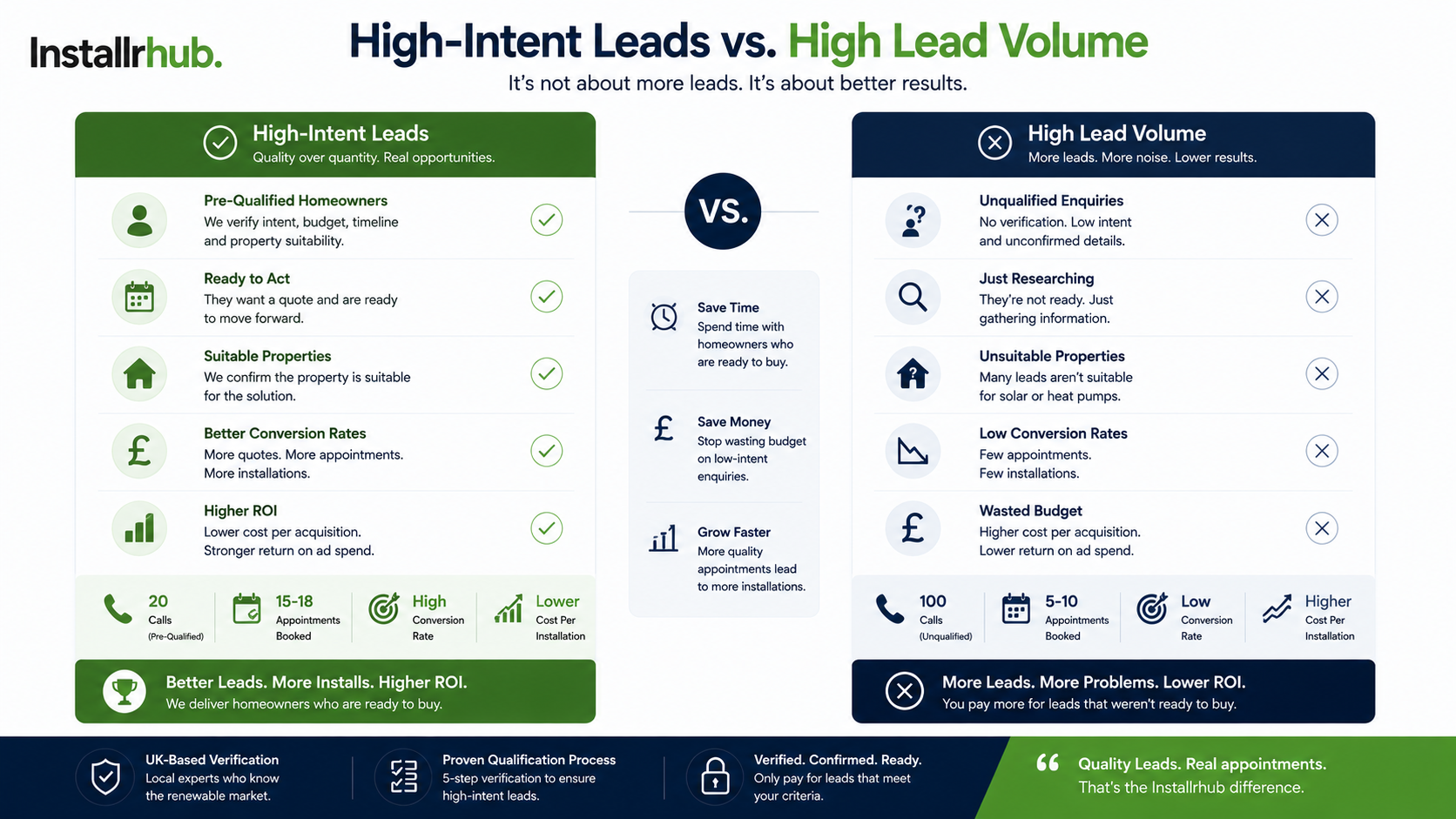
For businesses looking to reduce wasted survey appointments, improving lead qualification is often more valuable than simply increasing enquiry volume.
Turn Better Qualification Into Better Installations
The strongest installation businesses don't rely on more enquiries alone. They focus on speaking with homeowners who have a genuine reason to install, realistic expectations and properties that are suitable for renewable energy.
At InstallrHub, every survey appointment goes through a qualification process before it's made available to installers, helping reduce wasted time and improve the quality of conversations.
If you'd like to learn how our pre-booked survey model works, we'd be happy to show you.