Trust Starts Before the First Conversation
Choosing a solar or heat pump installer is a significant decision for a homeowner. The project may involve substantial expenditure, changes to the property and decisions about a system the customer expects to use for years.
Most homeowners cannot independently assess every technical recommendation. They must rely on the installer's explanations, experience and ability to deliver the proposed work.
That makes trust an important part of the sales process.
Trust does not come from a persuasive sales pitch alone. It develops through the complete experience: what the homeowner sees online, how the initial enquiry is handled, whether the survey feels organised, how clearly the proposal is explained and whether the installer follows through on commitments.
The meeting transcript highlights several practical aspects of this experience. The installer needs to understand the homeowner's circumstances, ask useful questions, explain what happens next and balance a friendly conversation with a clear survey agenda.
These are not simply customer-service details. They help homeowners understand the project and decide whether they feel comfortable moving forward.
Build Credibility Before the Enquiry Arrives
The sales process often begins before a homeowner speaks to an installer.
A prospective customer may review the company's website, search for online reviews, look at social media or ask for recommendations. These sources help the homeowner decide whether the business appears credible enough to contact.
An online presence should therefore make it easy for potential customers to understand what the company does, where it operates and what happens when someone makes an enquiry.
A clear website can explain the services offered, the types of properties served and the process involved in arranging an assessment. Contact details should be easy to find, and the information should be consistent across the company's channels.
Reviews can provide additional reassurance when they are genuine and presented appropriately. Case studies can also help demonstrate how the company approaches projects, provided the details are accurate and the customer has given permission for the material to be shared.
Installers should avoid presenting generic stock imagery or broad claims as proof of completed work. Real, relevant evidence is more useful than an impressive-looking page that leaves homeowners unsure what the business actually delivers.
Explain the Process Before the Survey
A survey can be an important opportunity to establish confidence, but homeowners may not know what to expect.
Some may assume that the visit is simply an opportunity to receive a price. Others may expect a detailed technical recommendation immediately, even when additional information is needed.
Setting expectations beforehand helps avoid confusion.
When arranging a visit, explain the purpose of the survey, the information the installer hopes to gather and any details the homeowner should have available. Where appropriate, clarify whether the appointment will include a discussion of the existing heating system, property layout, household requirements or possible additional work.
It is also useful to explain what will happen after the visit. If the proposal requires further technical assessment, say so. If the homeowner should expect a follow-up conversation, explain how that will be arranged.
These details make the process more predictable. They also reduce the risk of the homeowner interpreting a necessary additional assessment as a sign that the installer was unprepared.
Listen Before Recommending a Solution
Technical knowledge is essential, but a successful consultation also requires the installer to understand what the homeowner is trying to achieve.
Two households may have similar properties but very different priorities. One homeowner may be planning a broader renovation, while another may want to address a specific heating problem. Some may be focused on comfort, others on system replacement or the practicalities of future maintenance.
A recommendation that ignores these differences can feel generic, even if it is technically reasonable.
Installers should ask open questions and give homeowners enough time to explain their circumstances. They can then clarify the details that matter to the proposed system and identify any assumptions that need to be checked.
Active listening also helps uncover concerns that might otherwise remain hidden. A homeowner who appears hesitant may be uncertain about disruption, project scope, cost or the suitability of the proposed system.
The right response is not to assume the objection or immediately try to overcome it. Ask a clarifying question, listen to the answer and explain the relevant information.
This makes the discussion more useful for both parties.
Be Friendly Without Losing the Survey Agenda
Building rapport does not mean allowing the appointment to become unstructured.
A conversation about the homeowner's plans can help establish context and make the visit more comfortable. However, the installer also needs to gather the information required to assess the property and determine the next steps.
A simple agenda can help balance both objectives.
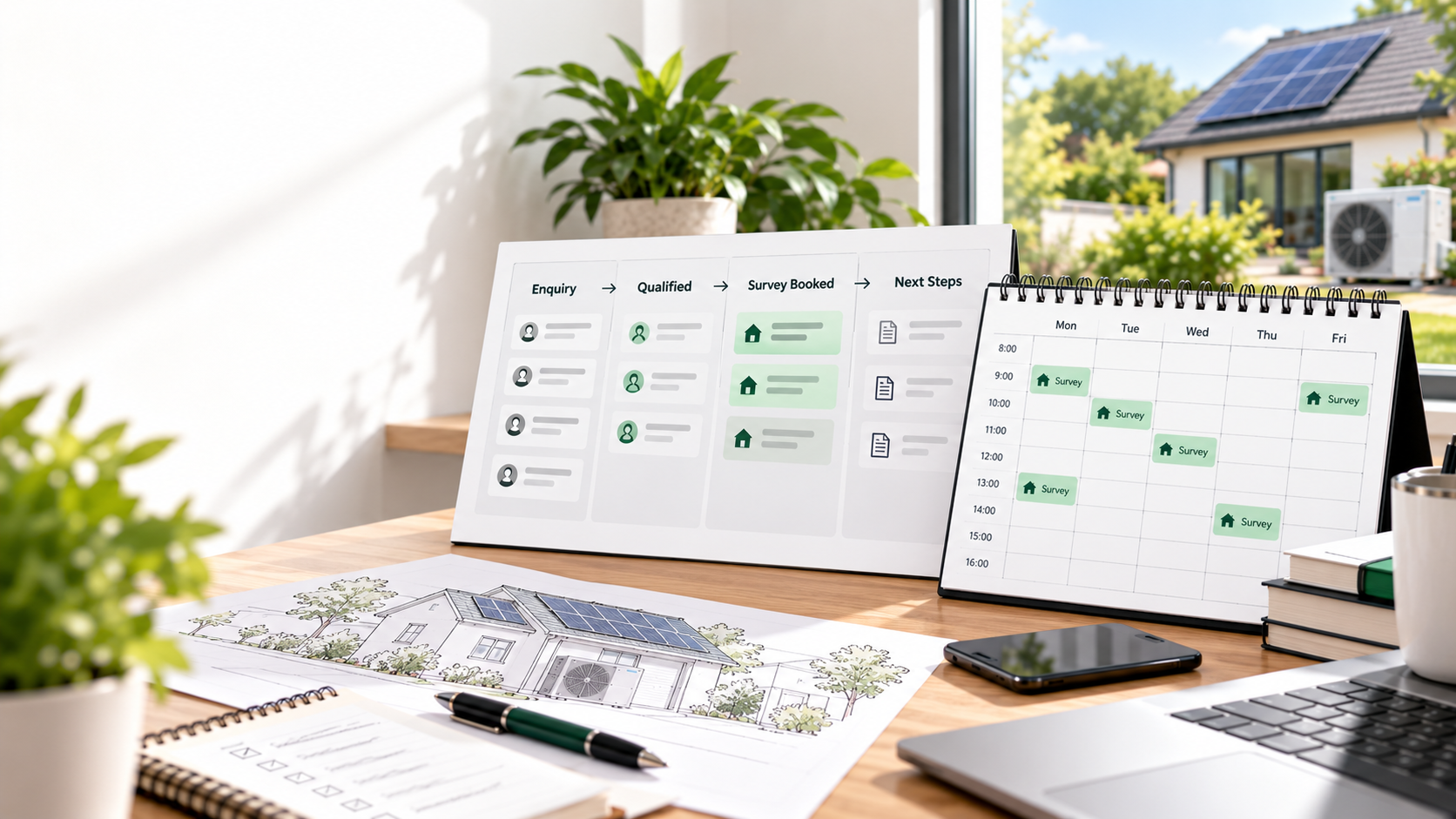
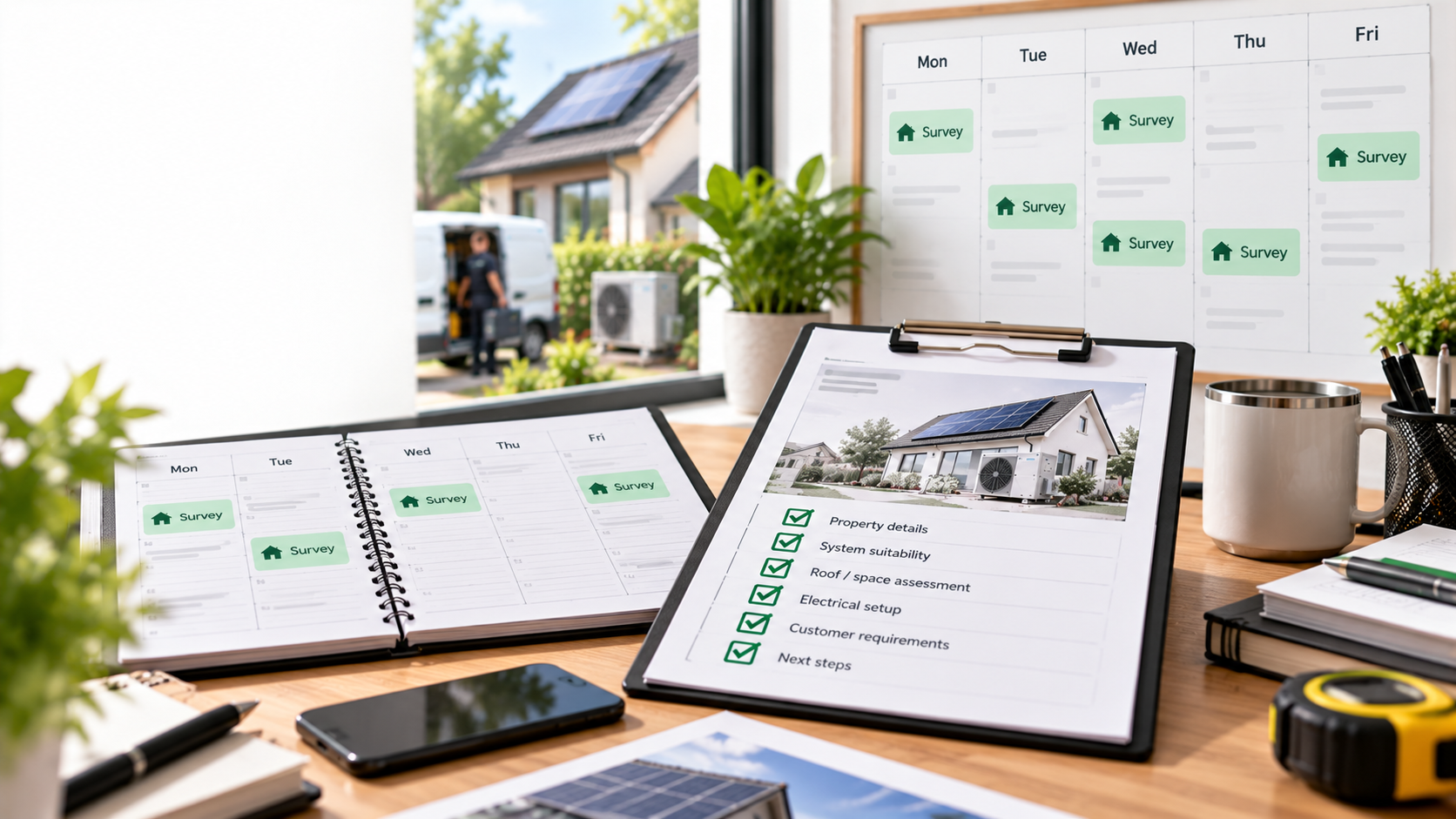
The installer might begin by asking about the homeowner's goals, then review the existing system, assess the property and discuss any initial observations. Before concluding, they can summarise the key findings, explain any outstanding questions and confirm what happens next.
The exact process will depend on the service and the property. The important point is to have a repeatable structure while allowing enough flexibility for the conversation to develop naturally.
A structured survey also makes it easier to record information consistently. This is particularly valuable when another team member may later prepare the proposal or follow up with the homeowner.
Explain Value Without Overpromising
Homeowners often want to understand what they will gain from an installation. It is reasonable to discuss the intended benefits, but the explanation needs to be grounded in the property's circumstances.
For example, discussions about energy costs should distinguish between estimates and guaranteed outcomes. Any comparison should state the assumptions used and acknowledge the factors that could affect actual performance.
Similarly, an installer should not promise that a particular improvement will increase a property's resale value by a specific amount unless there is appropriate evidence supporting that claim.
A more credible approach is to explain what the proposed system is designed to do, what information supports the recommendation and what remains uncertain.
If additional work is required, explain why it may be necessary and how it relates to the homeowner's objectives. If there are options, describe the differences clearly rather than presenting the most expensive solution as the only reasonable choice without justification.
Honest explanations can help homeowners make informed decisions. They also reduce the likelihood of misunderstandings when the project moves from the sales stage into delivery.
Make the Proposal Easy to Understand
A technically accurate proposal can still be difficult for a homeowner to evaluate if the information is poorly organised.
The document should explain the proposed scope, the main components, any relevant additional work, exclusions and the next steps. Where assumptions remain, those should be stated clearly.
If the project involves more than one element, separate explanations can help the homeowner understand how the parts relate to one another. This is particularly useful when the initial enquiry concerned a single system but the property assessment identified additional requirements.
Installers should also ensure that the proposal reflects the conversation. If the homeowner raised a particular concern during the survey, the document should address it where relevant.
A clear proposal does not guarantee acceptance. It gives the homeowner a fair opportunity to understand what is being offered and decide whether it meets their needs.
Consistency Builds Trust After the Survey
Trust can be weakened when a business fails to follow through on small commitments.
If the installer says a proposal will be sent by a certain date, the business should aim to meet that expectation. If a delay occurs, communicating the revised timeframe is better than leaving the homeowner waiting without an explanation.
The same principle applies to follow-up messages, appointment changes and requests for additional information.
A documented process helps ensure that these commitments do not depend entirely on memory. It also allows another team member to step in when the person who attended the survey is unavailable.
Consistency matters because homeowners experience the business as a whole. A technically excellent survey may not create confidence if the subsequent communication is disorganised.
Trust Is Built Throughout the Customer Journey
For solar and heat pump installers, trust is not a single sales technique. It is the result of clear information, relevant advice, realistic expectations and consistent follow-through.
An accurate online presence helps establish credibility before contact. A structured survey helps the homeowner understand the process. Active listening and clear explanations make the recommendation more relevant. A well-organised proposal and reliable follow-up reinforce the impression that the business can manage the project professionally.
None of these actions guarantees a sale, but they help create a customer experience in which homeowners can make better-informed decisions.
Want to Strengthen Your Installer Business?
Review how your business attracts enquiries, communicates with homeowners and manages the customer journey from the first interaction through to the proposal.
Frequently Asked Questions
Why is trust important when selling heat pumps?
Homeowners are making a significant decision involving their property, budget and heating requirements. Clear explanations, credible evidence and reliable communication can help them assess whether an installer is suitable for the project.
Do online reviews help solar installers win work?
Reviews can contribute to a homeowner's assessment of a business, particularly when they are genuine, relevant and consistent with the company's service. They should be supported by a clear website and accurate information rather than treated as a guarantee of sales.
How can installers improve the home survey experience?
Explain the purpose of the appointment, ask relevant questions, listen to the homeowner's priorities, record the findings and confirm the next steps before leaving.
Should installers discuss energy savings during a survey?
They can discuss potential benefits where appropriate, but estimates should be based on relevant assumptions and the property's circumstances. Avoid presenting uncertain outcomes as guaranteed savings.