When Should a Solar or Heat Pump Installer Hire Their First Sales Rep?
Hiring your first sales rep can feel like the next logical step when your solar or heat pump installation business starts growing.
You want to take on more customers, increase installation volume and free yourself from handling every survey, quote and sales conversation. Bringing someone into the business could help you do all three.
But hiring too early — or hiring before your business is ready — can create another problem. Instead of gaining time, you may find yourself managing every decision, correcting mistakes and supporting a sales process that still depends entirely on you.
So, when is the right time to hire a solar sales rep?
The answer isn't simply when you have too many enquiries. It's when your business has the lead flow, processes, numbers and support needed to help another person succeed.
1. You Need Consistent Opportunities, Not Just Occasional Busy Weeks
Before hiring a sales rep, look at the consistency of your lead flow.
A few busy weeks can make it feel as though your business is ready to expand. However, if enquiries fluctuate significantly, a new salesperson may struggle to maintain a predictable pipeline of appointments and potential sales.
That creates problems for both sides. You have another salary or commission arrangement to manage, while your new recruit may struggle to see a reliable earning opportunity.
Salespeople need a reasonable understanding of the opportunities available to them. If they believe they cannot earn what they expected, they may become dissatisfied or leave.
For solar and heat pump installers, the goal should be to establish a more predictable flow of suitable enquiries and booked surveys before adding sales capacity.
This doesn't mean you need a perfect pipeline before hiring. It means understanding your current lead volume, the quality of those opportunities and how consistently they turn into appointments.
Ask yourself: Can I give a new sales rep a realistic picture of the opportunities they will be working with each week?
If you cannot answer that question, start by measuring your pipeline.
2. Know Your Numbers Before You Commit
Hiring decisions become easier when you understand the numbers behind your sales process.
Before recruiting, review:
- Marketing spend: How much are you investing to generate enquiries?
- Lead volume: How many enquiries can you reasonably expect?
- Survey conversion: What proportion of enquiries become booked surveys?
- Sales conversion: How many completed surveys turn into installations?
- Margins: How much profit remains after the costs associated with each job?
- Sales rep earnings: What could a salesperson realistically earn based on your current opportunities and commission structure?
These figures help you understand whether adding a sales rep is commercially viable.
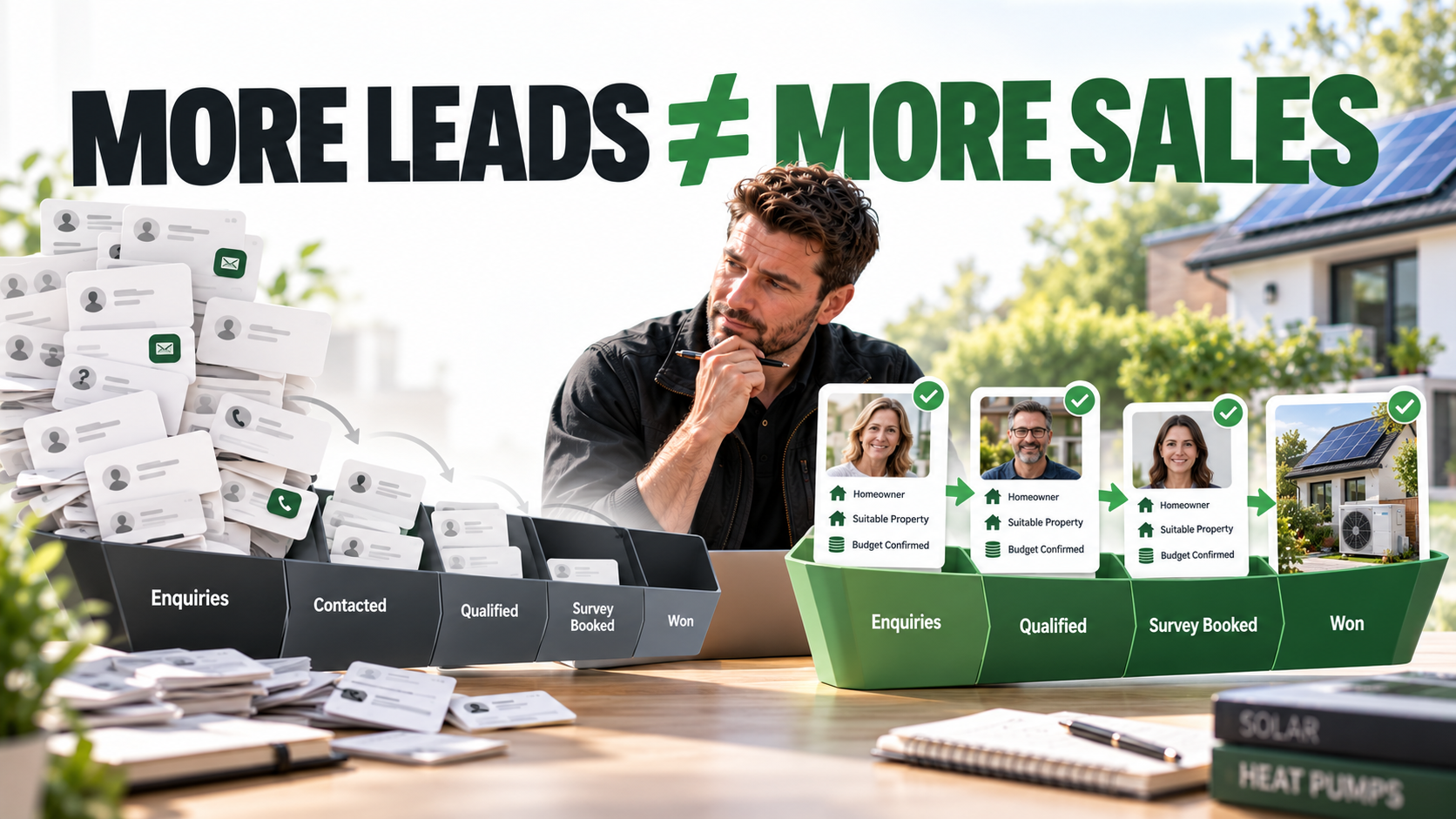
For example, generating more enquiries doesn't necessarily mean generating more profitable installations. If too many leads are unsuitable, outside the customer's budget or unlikely to proceed, your salesperson may spend valuable time on opportunities that go nowhere.
You need to understand the entire journey, from initial enquiry to completed installation.
This also helps you set realistic expectations with a prospective hire. Rather than promising unlimited opportunities or earnings, you can explain how the sales process works and what performance will depend on.
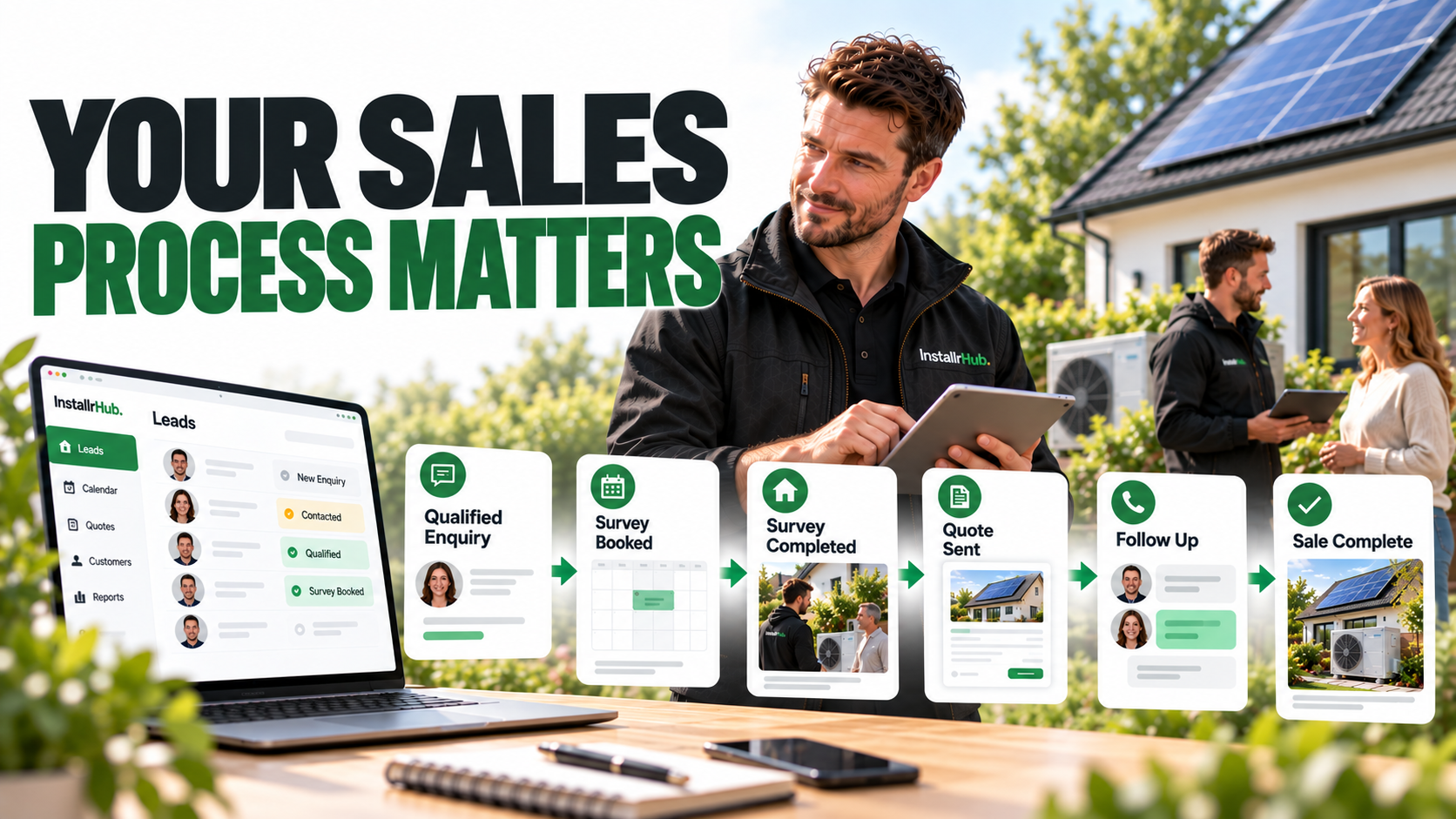
3. Build the Sales Process Before Hiring
One of the biggest mistakes an installation business can make is hiring someone and expecting them to create the sales process from scratch.
If you are still the only person who knows how to qualify a lead, prepare a quote, answer common questions and move a customer towards a decision, your new recruit will need constant guidance.
That can leave you with two jobs: running the business and managing the salesperson.
Before hiring, document the essential parts of your process.
Consider:
- How enquiries are received and recorded.
- What information must be collected before arranging a survey.
- How customers are qualified.
- How appointments are booked and rescheduled.
- How quotes are prepared and followed up.
- How the sales pipeline is tracked.
- When a salesperson should ask for technical or management support.
You don't need an elaborate system to get started. You need a process that another capable person can understand, follow and improve.
A customer relationship management system (CRM), consistent quoting procedures and clear responsibilities can help reduce the number of decisions that automatically return to the owner.
The objective is not to remove the owner from the business completely. It is to stop routine sales activities from depending on the owner at every stage.
4. Hire Someone Who Understands the Customer, Not Just the Sale
Solar and heat pump sales involve more than persuading someone to buy a product.
The salesperson needs to understand the customer's property, requirements and expectations. They also need to recognise when a job may not be technically suitable or when a customer's budget and expectations do not align.
A good sales rep should understand how the company's products and installation services work in practice.
That knowledge cannot always be gained by reading a brochure.
In Episode 030 of the InstallrHub conversation series, Stuart from Gas Worx discussed the importance of helping a new salesperson understand the team's values, products and the realities of installation work.
That includes learning from the people who carry out the work, understanding the customer journey and recognising the difference between closing a sale and setting up a successful installation.
For an installation business, a sale is not the end of the process. The job still needs to be suitable, correctly understood and delivered to the expected standard.
Look for someone who can build trust, ask useful questions and work with your technical team — not simply someone who is confident at selling.
5. Plan for Training and a Gradual Start
Even an experienced salesperson needs time to understand a new business.
Your products, pricing, installation processes, customer expectations and internal systems may differ significantly from those of their previous employer.
Expecting a new hire to perform independently from day one can lead to avoidable mistakes.
Instead, create a structured onboarding plan.
Start by introducing the salesperson to your team, services and values. Let them learn how your installations work and how your engineers approach different properties.
Where appropriate, have them shadow experienced team members, review real customer scenarios and practise using your quoting and CRM systems.
Agree on what they should be able to do independently at each stage.
During the first couple of weeks, schedule regular feedback sessions. Discuss the questions they are encountering, where customers are dropping out of the pipeline and what additional support they need.
A gradual start gives you the opportunity to identify problems early, rather than discovering them after poor customer experiences or missed sales.
6. Make Sure the Hire Frees Up the Right Time
The reason for hiring matters just as much as the timing.
If your main objective is to free yourself from sales appointments and day-to-day customer management, define what you want to do with that extra capacity.
Perhaps you need more time to improve marketing, review business performance, develop your team or create repeatable processes for future growth.
These activities can be difficult to prioritise when every day is consumed by immediate operational demands.
In the Gas Worx interview, Stuart discussed wanting more time to focus on marketing, business development and optimisation as the company grows.
That is an important distinction: hiring should support a specific business objective, not simply add another person to the payroll.
Before recruiting, identify the responsibilities you want to delegate, the responsibilities you will retain and the work you will prioritise once that time becomes available.
Then measure whether the hire is actually creating that capacity.
7. Don't Scale Faster Than Your Business Can Deliver
More sales are only useful if your business can deliver the resulting installations consistently.
Increasing sales volume without considering engineering capacity, scheduling, customer communication and operational processes can put pressure on the entire business.
That is why hiring a sales rep should form part of a wider growth plan.
Review your installation capacity. Understand how many jobs your team can deliver without compromising standards. Make sure the handover from sales to operations is clear, and establish how customer expectations will be managed.
You may also need to improve your lead qualification process so that your sales team spends time on suitable opportunities rather than arranging surveys that are unlikely to progress.
Growth should be supported by a business that is ready to handle it.
The aim is not simply to sell more jobs. It is to build a business that can convert opportunities into profitable installations while maintaining the service customers expect.
So, When Is the Right Time to Hire Your First Sales Rep?
There is no single lead-volume threshold that applies to every solar or heat pump installer.
A business with a strong pipeline, clear processes and sufficient installation capacity may be ready before another business with a similar number of enquiries.
Before hiring, make sure you can answer these five questions:
- Is my lead flow consistent enough to give a salesperson a realistic opportunity to succeed?
- Do I understand my numbers well enough to assess the commercial viability of the role?
- Can another person follow my sales process without relying on me for every decision?
- Can I train and support the new hire so they understand our customers, products and installation requirements?
- Can my business deliver the additional work without compromising quality?
If several of these areas need attention, that doesn't mean you should abandon your growth plans. It means you have a clearer picture of what needs to happen before you recruit.
Build the process, understand the numbers and establish a more predictable pipeline first. Then you can make a hiring decision based on the needs of the business rather than the pressure of a busy week.
Build a More Predictable Pipeline for Your Installation Business
Hiring the right salesperson can help a growing installation business create capacity and reduce its dependence on the owner. But the hire works best when it is supported by suitable leads, a clear process and a realistic plan for growth.
InstallrHub helps UK solar and heat pump installers generate price-qualified opportunities and get surveys booked into their diaries, helping them build a more consistent pipeline.
If you're looking to improve your survey pipeline and plan your next stage of growth, explore how InstallrHub can help.
Book a call with InstallrHub to discuss your lead-generation and survey-booking needs.